

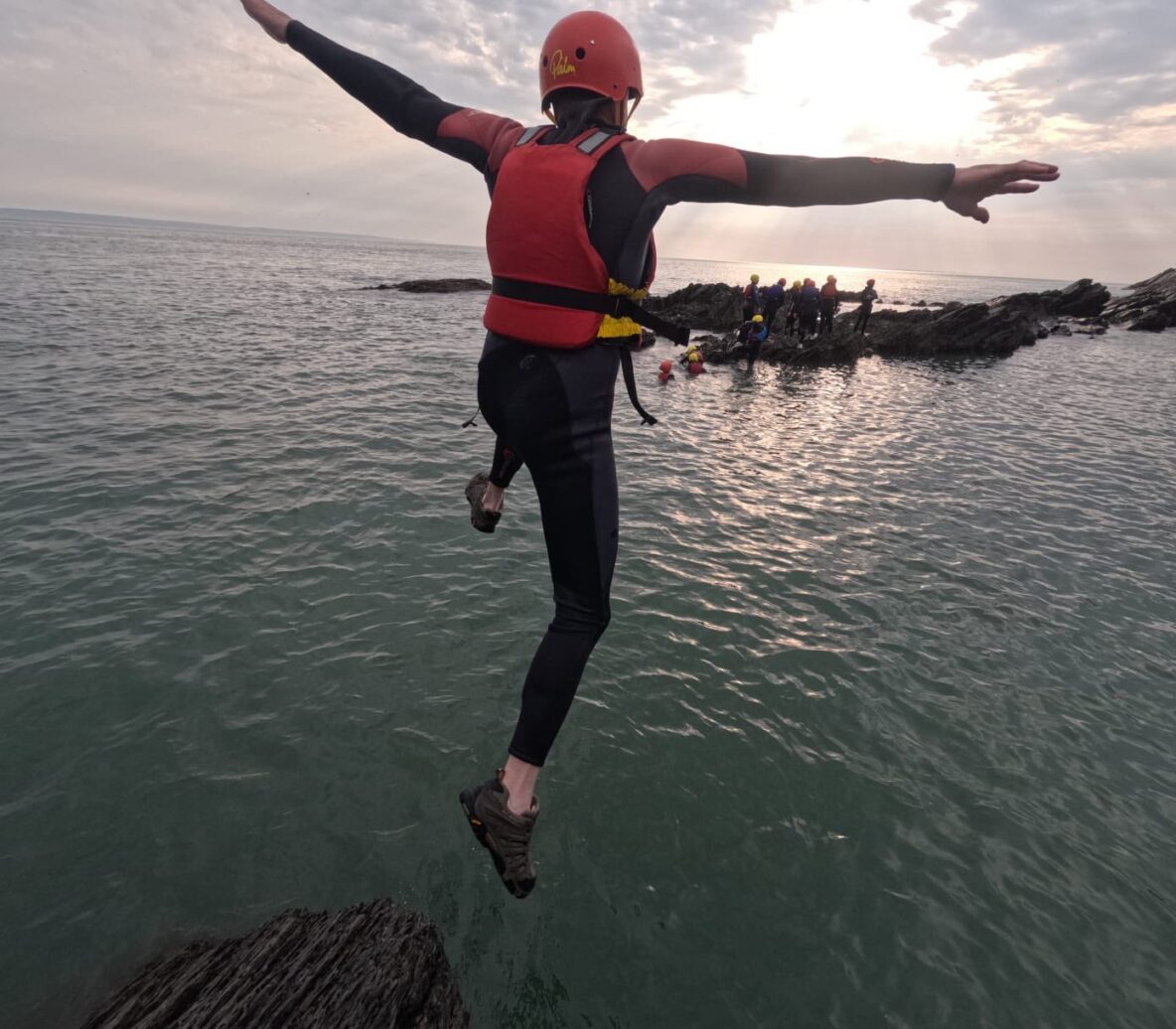
Coasteering — More Than Just “Jumping Off Cliffs”
Coasteering is one of the UK’s most exciting adventure sports. It combines elements of cliff-scrambling, sea swimming, rock-hopping, and sometimes cliff-jumping — all along rugged coastlines (without the use of boats or surfboards).
For many, especially at locations like Baggy Point, Croyde Bay, a coasteering trip in North Devon becomes a full-on coastal adventure: you explore sea caves, scramble over rocky headlands, swim through tidal pools, and leap into the sea — always under expert supervision and using proper safety gear.
In this guide, we’ll walk you through what a typical coasteering session involves, what you need to know, and why a spot like Croyde Bay offers some of the best experiences in the UK.
What Exactly Happens in a Coasteering Session?
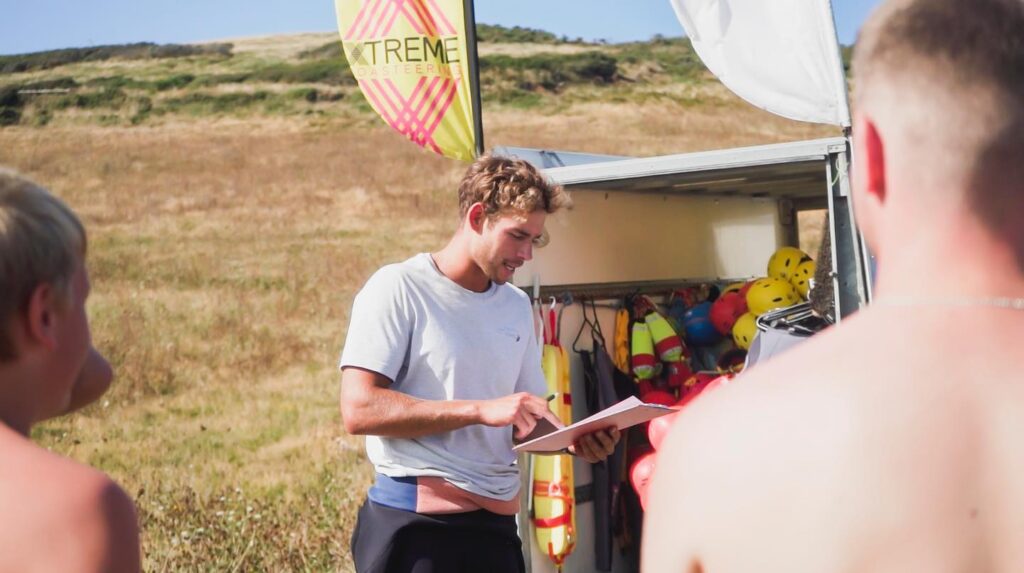
1. Gear Up & Safety Briefing
Before you even reach the sea:
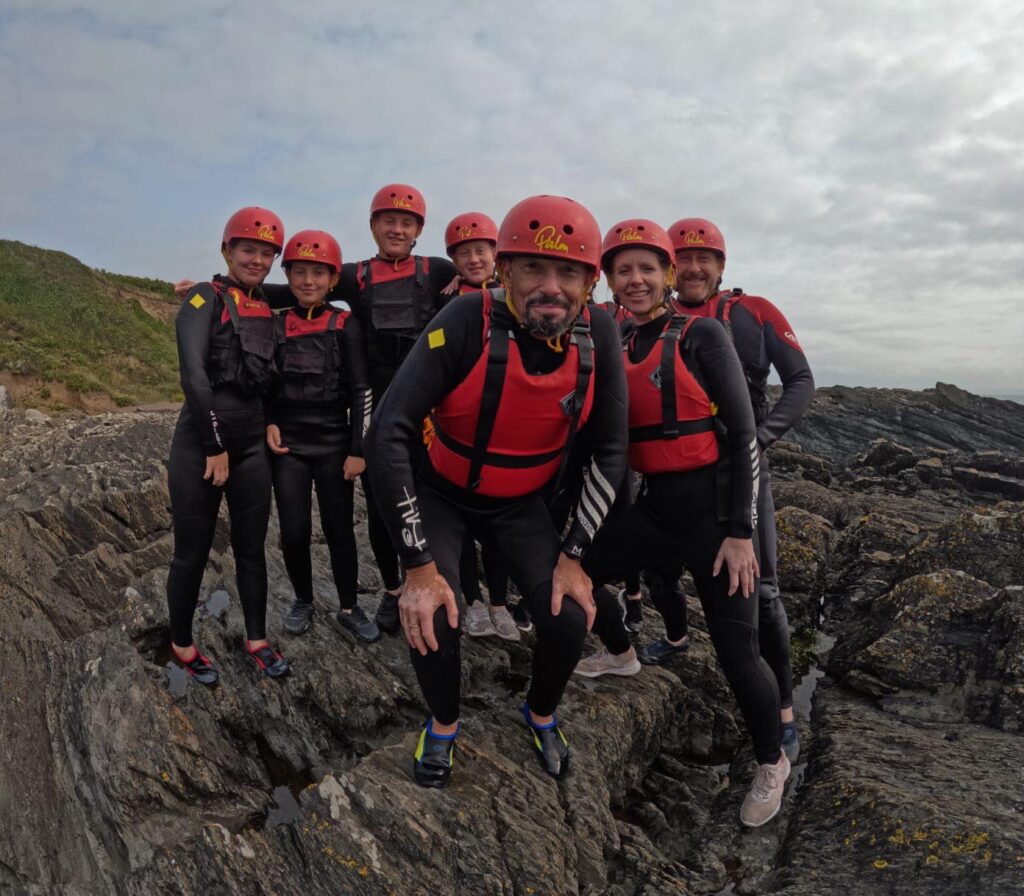
- You’re provided with essential safety gear — wetsuit, buoyancy aid, helmet, you’re expected to bring your own secure footwear (old trainers are fine).
- As part of safety protocols, a qualified guide runs through risk assessment, tide awareness, group ratios, and emergency procedures. All good providers follow guidelines from industry bodies such as the National Coasteering Charter (NCC).
- At locations like Croyde Bay you may also get access to facilities like indoor changing rooms, hot showers, and even a café or a place to relax after your adventure — making the whole experience more comfortable and convenient.
This setup ensures that participants are safe, warm, and prepared before they enter the water.
2. Coastal Traversing: Scrambling, Rock-Hopping & Cliffside Walking
Once geared up, the adventure begins with navigating the rocky intertidal zone — the stretch between low and high tide where sea meets land. This includes:
- Scrambling and rock-hopping over natural rock ledges, boulders, and outcrops. This part often requires good balance, careful footing, and sometimes a bit of flexibility, as you walk or climb over uneven and slippery surfaces.
- Exploring sea caves, arches, and gullies, reaching spots and views unreachable by regular routes. These hidden features of the coastline reveal a side of the coast many don’t see.
- A sense of adventure and discovery — coasteering lets you literally navigate the “impact zone,” where waves, rock, and tide converge, giving you a unique coastal perspective.
At places like Baggy Point at Croyde Bay, the terrain is varied — from mellow scrambles to more rugged sections — making it suitable for a range of abilities.
3. Swimming, Water Traversing & Sea-Pool Exploration
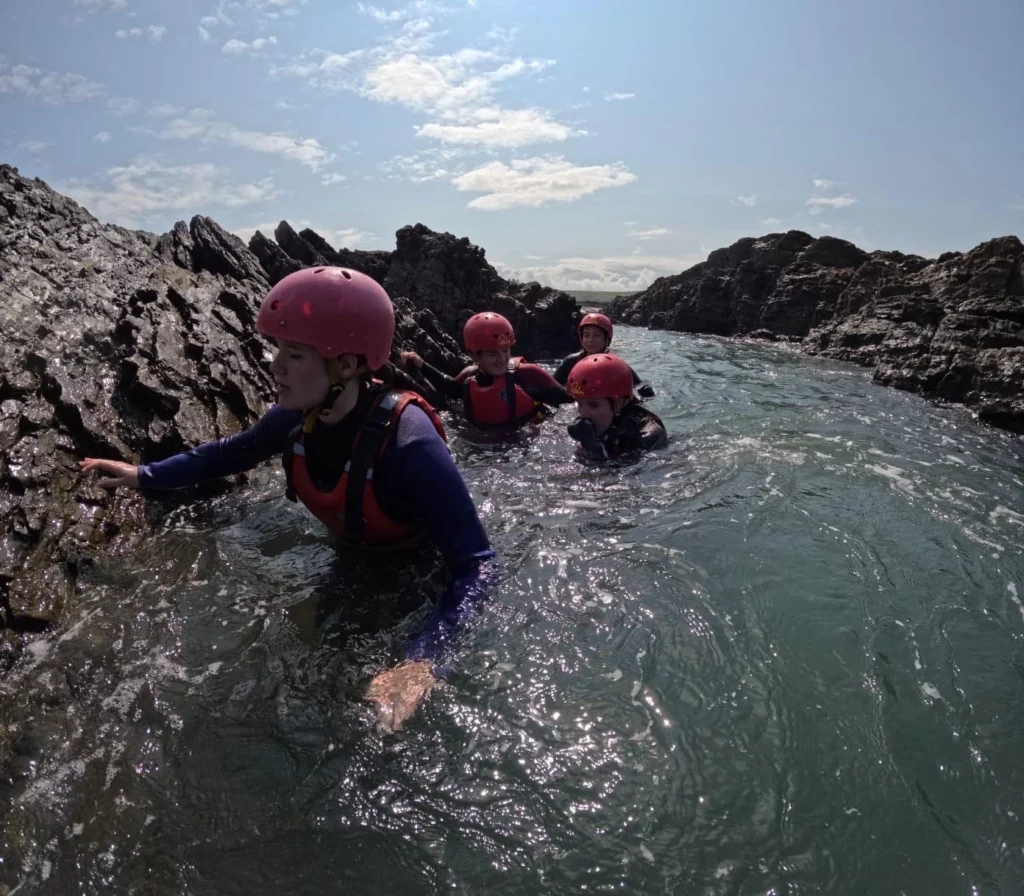
Coasteering also often involves entering the water:
- Swimming through tidal pools, channels, or sea-water gullies is common. In calmer conditions, you might float or swim gently; in others, you may negotiate waves or mild surf.
- Discovering marine life and coastal ecology — from small fish, crustaceans, sea weeds to barnacles and sea anemones — especially in rock pools and clear tidal waters. This adds an educational and nature-connected dimension to the adventure.
- Experiencing the changing coastline — because coasteering routes depend heavily on tides, swell and weather, no two sessions are the same. It’s a dynamic, ever-changing outdoor activity that combines fun with respect for nature.
4. Cliff Jumps & Water Leaps (Optional, Guided & Controlled)
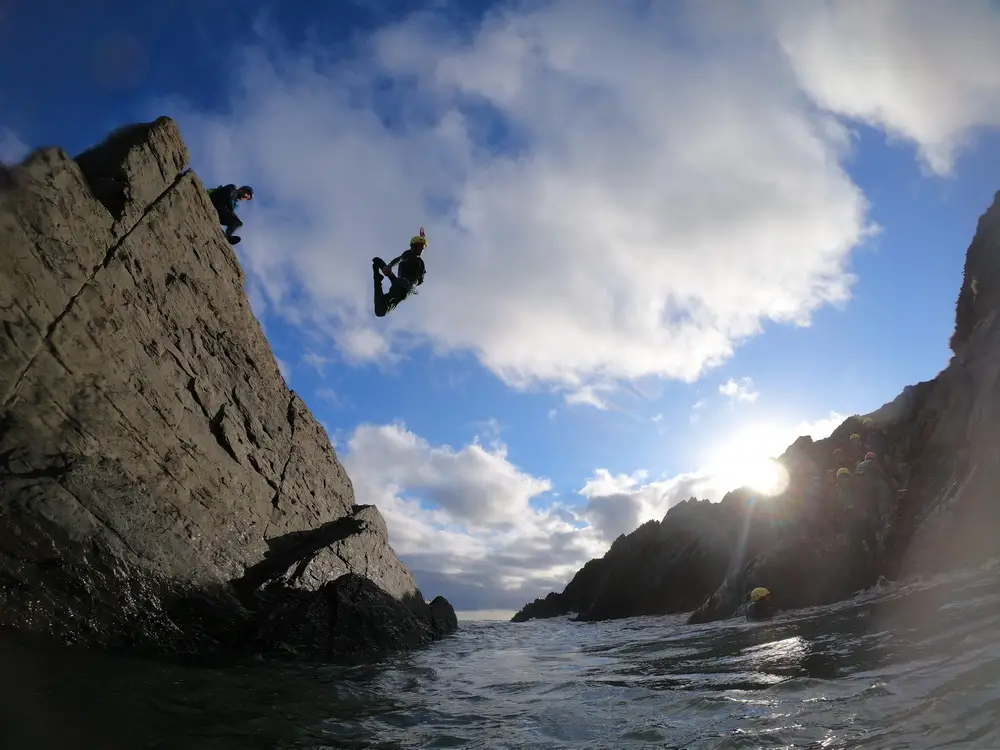
Perhaps the most adrenaline-packed element of coasteering: controlled cliff jumps or water leaps.
- Depending on the route and conditions, participants may have the opportunity to jump from rocks/cliffs into deep water. Drop heights vary depending on tide and sea state — from gentle entries suitable for beginners to bigger jumps for more confident participants.
- These jumps are optional and always guided. A professional coasteering guide assesses each person’s comfort, fitness and ability before allowing any jumps. This makes coasteering inclusive — people can opt for gentle exploration, or push themselves if they wish.
- Jumping into water adds a thrill factor — the splash, the marine environment, and the sense of achievement — but also demands respect for safety procedures, depth, and tides. Good guides ensure safety gear is used and conditions are checked.

Why Croyde Bay (Baggy Point) Is a Great Choice for Coasteering
If you’re wondering where to try coasteering, Croyde Bay / Baggy Point in North Devon ticks nearly all the boxes. Here’s why:
- Varied terrain: From gentle scrambles to more adventurous cliff edges — routes that suit beginners, families, groups, and thrill-seekers alike.
- Expert local guides: Coasteering providers there follow standard safety protocols and are led by experienced local guides with knowledge of tides, coastlines and current sea conditions.
- Full gear & facilities: Good providers supply wetsuits, buoyancy aids, helmets — and often extras such as indoor changing rooms, hot showers, and sea-view cafés for comfort after the session.
- Flexibility: Because coasteering is weather- and tide-dependent, guides can adjust routes to match sea state — making it safe yet adventurous regardless of conditions.
- Natural beauty & variety: The coastline around Croyde offers sea caves, rocky headlands, tidal pools, dramatic Atlantic-facing cliffs and clear water — giving a rich mix of adventure and scenic views.
Because of these factors, many consider Croyde Bay as one of the best — if not the best — places in the UK for a guided coasteering adventure.
What to Bring, and What to Expect — Practical Tips
- Wear or bring: Swimwear (under wetsuit), old trainers or secure water-ready footwear (no flip-flops), towel, and a sense of adventure. Good providers usually supply wetsuit, buoyancy aid, helmet and sometimes wetsuit shorts / rash gear.
- Fitness requirement: A basic level of water confidence is helpful. Many providers accept children from around age 8, though participants must be comfortable swimming / floating for short distances.
- Time needed: A typical guided session lasts about 2.5 – 3 hours, including equipment fitting, safety briefing, the coasteering route, and return.
- Post-session: Often includes shower or changing facilities, which makes it easier for groups or families to enjoy the activity comfortably.
- What you might see: Natural sea caves, rock formations, tidal pools, marine wildlife (fish, seaweed, maybe crustaceans), and spectacular coastal scenery.
Common Questions About What Coasteering Involves
Q: Do I need to be an experienced swimmer to coasteer?
A: You should be comfortable in water — most sessions assume basic swimming or floating ability. Providers supply buoyancy aids and safety gear to support swimmers of all levels.
Q: Is cliff-jumping mandatory in coasteering?
A: No — jumps are optional. Good coasteering providers adjust routes for ability and encourage only what participants are comfortable with.
Q: What safety gear do I need?
A: Essential gear includes wetsuit, buoyancy aid, helmet, and secure footwear. Many providers supply this. Closed-toe shoes (old trainers or wetsuit boots) are recommended for grip on slippery rocks.
Q: How long does a session take?
A: Typically 2.5 to 3 hours, including gear-up, briefing, guided route, and return.
Q: Can children or families do coasteering?
A: Yes — many providers (especially around Croyde Bay) offer family-friendly routes and accept participants from around age 8.
Conclusion — What Do You Really Do in Coasteering?
Coasteering isn’t a single activity — it’s a dynamic mix of sea swimming, rock scrambling, tidal-pool exploration, cave navigation, and optional cliff jumps, all set against the backdrop of Britain’s wildest coastal terrain.
At destinations like Croyde Bay / Baggy Point, the combination of stunning natural beauty, expert guides, and well-designed routes make coasteering accessible, safe — and unforgettable.
If you’re looking for an adventure that challenges your body, thrills your senses, and connects you to the sea and rock in a deeply intimate way, coasteering might just be your next great outdoors experience. Book you coasteering session today.
Sources
- Wikipedia – Coasteering
https://en.wikipedia.org/wiki/Coasteering - National Coasteering Charter – Safety Advice for Coasteering Providers (PDF)
https://www.nationalcoasteeringcharter.org.uk/wp-content/uploads/Safety-Advice-for-Coasteering-Providers-V4-Feb-2024.pdf - Xtreme Coasteering – Coasteering at Croyde Bay
https://www.xtremecoasteering.co.uk/coasteering-adventure-at-croyde-bay - British Farm Stays – Beginner’s Guide to Coasteering
https://www.britishfarmstays.com/beginners-guide-to-coasteering - Scouts UK – Coasteering Activity Guidance
https://www.scouts.org.uk/activities/coasteering/