

What Is Coasteering?
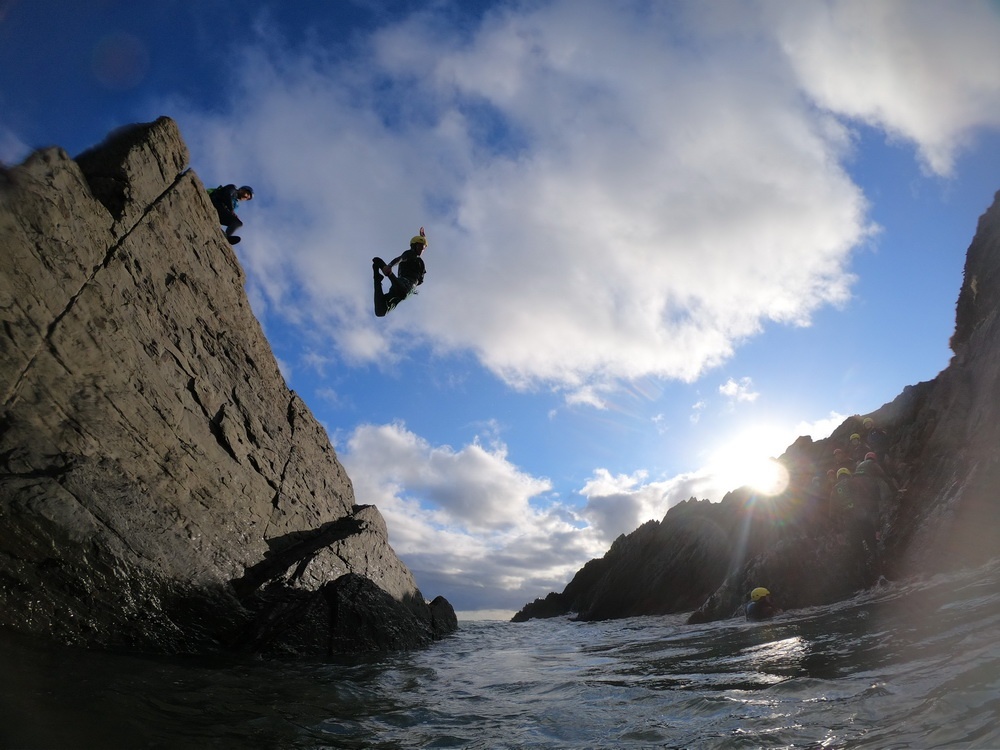
Coasteering is an outdoor adventure activity that involves exploring rocky coastlines at sea level. Instead of travelling along the coast by boat or kayak, participants move along the shoreline itself by scrambling over rocks, swimming through channels, and sometimes jumping into deep water from cliffs.
The activity originated in the UK and has become particularly popular along dramatic coastlines such as Croyde Bay and Baggy Point in North Devon, where the landscape provides the perfect mix of sea caves, tidal pools and rugged cliffs.
For many people visiting the region, coasteering in Croyde Bay is one of the most memorable ways to experience the Atlantic coastline.
What Happens During a Coasteering Session?
A typical coasteering adventure usually lasts between two and three hours and is led by experienced instructors.
Safety Briefing and Equipment
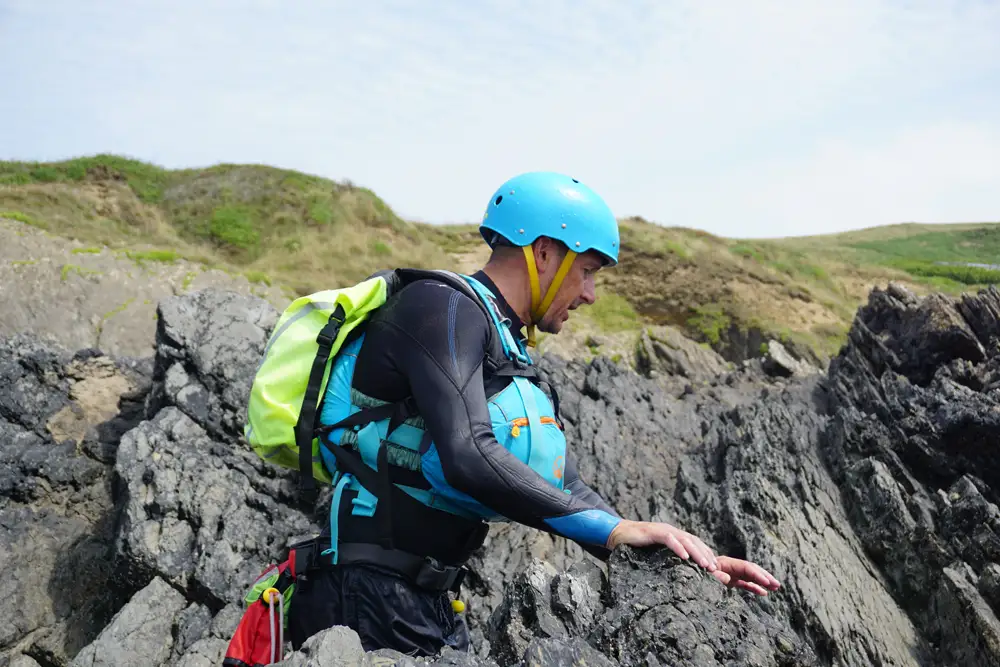
Before entering the water, participants are given a full safety briefing and fitted with specialist equipment. This usually includes:
- Wetsuits
- Buoyancy aids
- Helmets
These help protect against cold water and potential bumps against rocks.
Guided sessions with experienced providers like Coastline Sports’ coasteering adventures in North Devon ensure that all equipment is provided and properly fitted before the activity begins.
Scrambling Along the Coastline
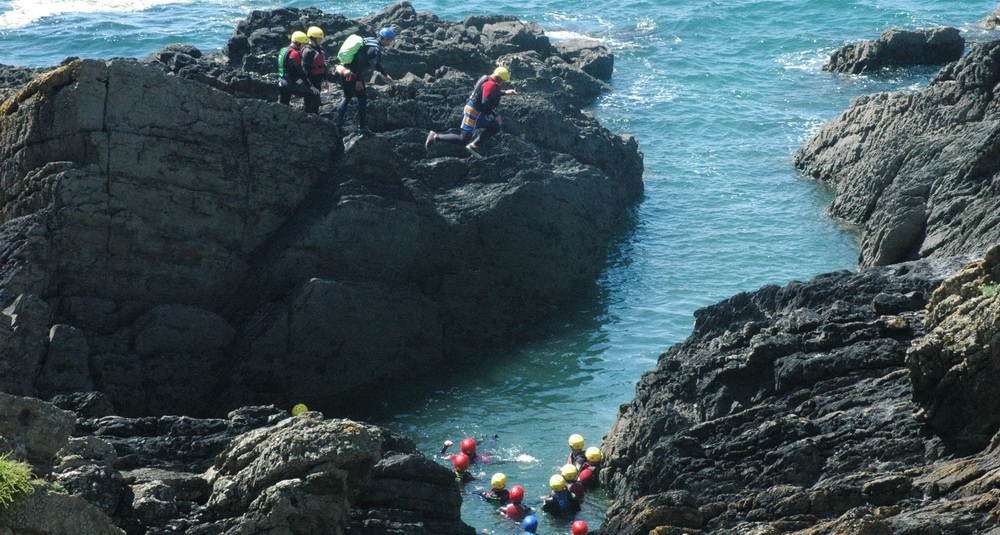
Once the group reaches the coastline, the adventure begins by scrambling across rocks and navigating the intertidal zone.
This part of the activity allows participants to explore areas of the coast that are normally inaccessible from land.
Along the way you may encounter:
- rock pools
- narrow gullies
- sea caves
- coastal ledges
At locations such as Baggy Point near Croyde, the coastline provides an ideal natural playground.
Swimming and Exploring Sea Channels
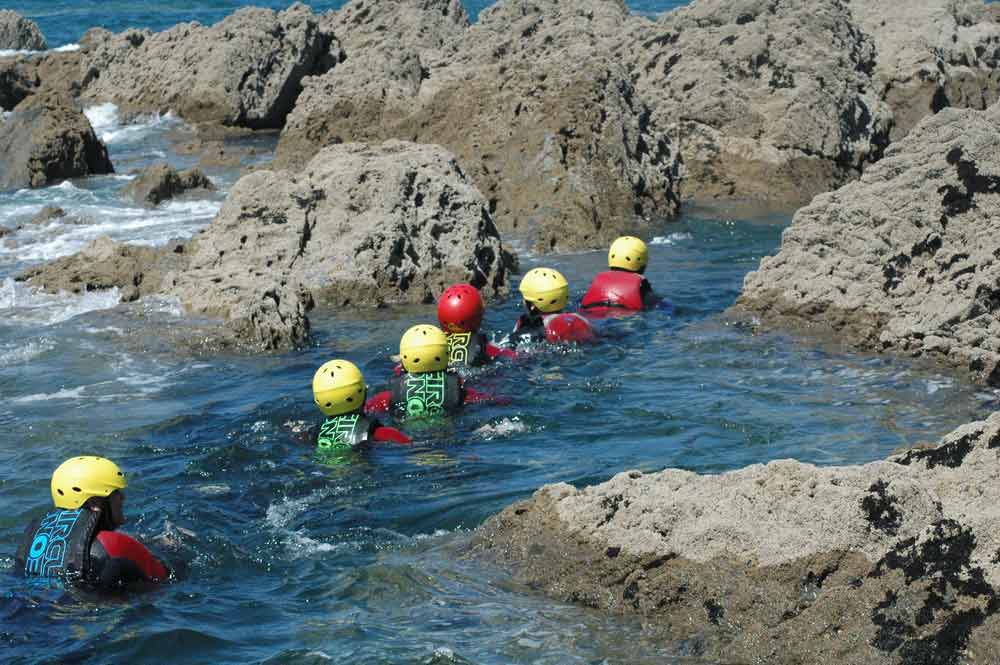
Many coasteering routes involve short swims through natural sea channels.
These swims allow participants to move between sections of coastline while experiencing the Atlantic Ocean up close.
During calm conditions the water can be surprisingly clear, and it’s not unusual to spot small fish, crabs or other marine life.
Cliff Jumping (Optional)
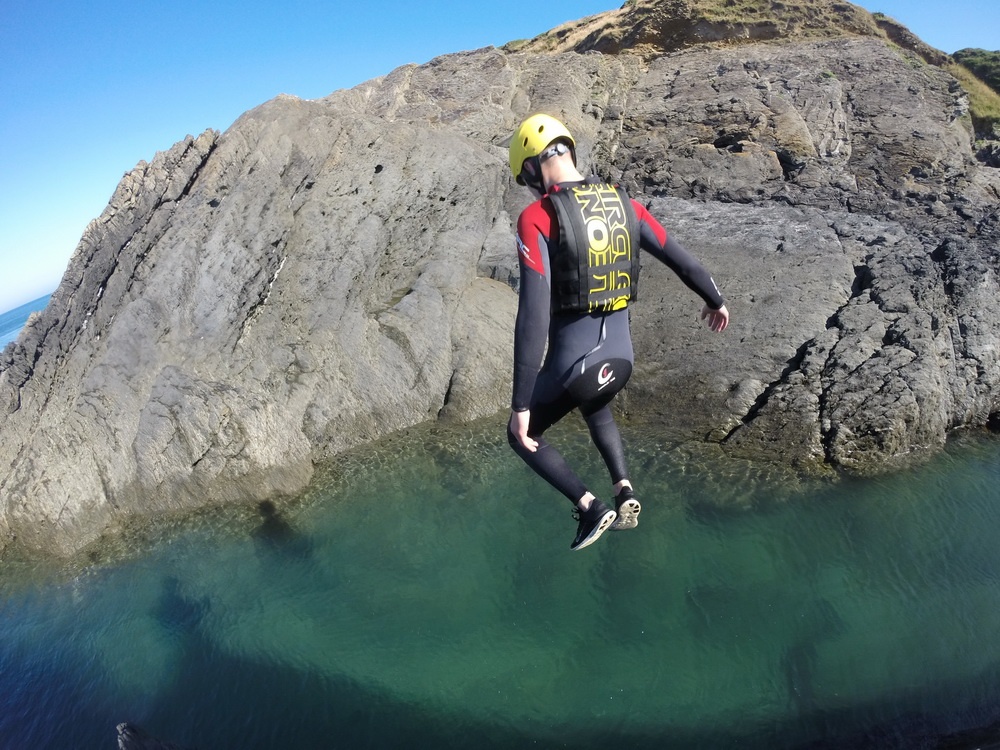
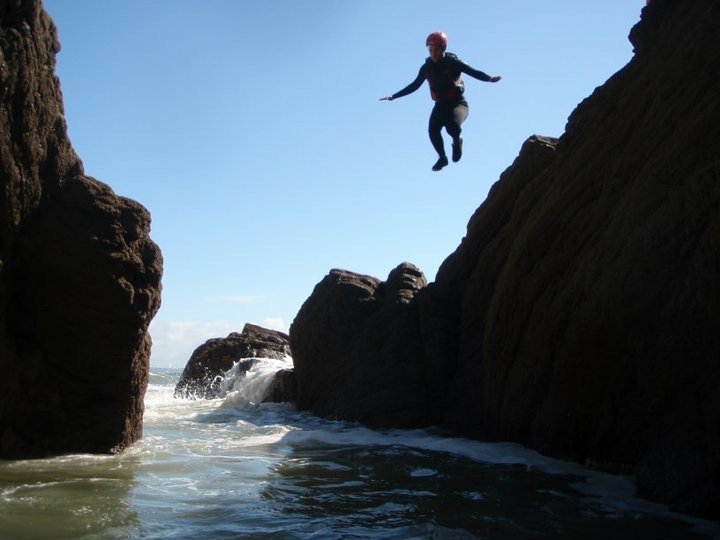
One of the most exciting aspects of coasteering is the opportunity to jump into the sea from natural rock ledges.
These jumps vary in height and are always optional. Instructors will only offer jumps where the water depth and sea conditions make them safe.
For many people, completing their first jump is the highlight of a coasteering session.
Why Croyde Bay Is Perfect for Coasteering
While coasteering can be done in several parts of the UK, Croyde Bay in North Devon stands out as one of the best locations.
The coastline around Baggy Point provides:
- varied terrain for different ability levels
- spectacular views across the Atlantic
- sea caves and tidal channels
- safe access points for guided groups
These natural features make the area ideal for both beginners and experienced adventurers.
Who Can Try Coasteering?
Coasteering is suitable for a wide range of participants.
Many sessions welcome:
- families
- groups of friends
- stag and hen parties
- school trips
- corporate groups
Most providers require participants to have basic water confidence and a reasonable level of fitness.
Conclusion
Coasteering is far more than simply jumping off cliffs. It’s a dynamic adventure that combines swimming, scrambling, and exploring the rugged coastline.
For those looking to try it for themselves, coasteering in Croyde Bay offers one of the most exciting experiences on the North Devon coast.
Guided sessions with Coastline Sports allow participants to explore this stunning environment safely while enjoying an unforgettable adventure.
FAQs
Is coasteering safe for beginners?
Yes. With experienced guides and proper safety equipment, coasteering can be suitable for beginners.
How long does a coasteering session last?
Most guided sessions last around two to three hours.